
Anxiety and overthinking
Online therapy for anxiety
If your mind won't switch off, or your body keeps bracing for something that never comes, therapy can help you find steadier ground.
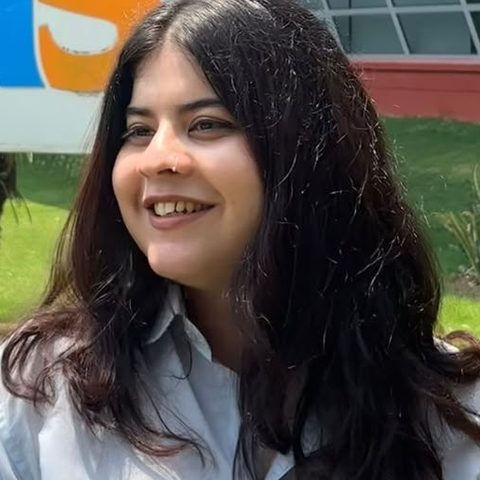 By Shambhavi Shastri · Counselling Psychologist · co-founder28 September 2026 · 5 min read
Anxiety can look like a lot of things. Lying awake replaying a conversation from the office. Checking the family WhatsApp group and feeling your stomach drop before you've read anything. Rehearsing what you'll say to a relative for days before a wedding. A racing heart in the metro that makes you get off two stops early. If some of this sounds familiar, therapy for anxiety might help, and you can do it online from wherever you are in India.
I'm Shambhavi, one of the two counselling psychologists at Nivaara Nest. Anxiety is one of the things Cherry and I see most often. This page explains how we work with it and what you can try in the meantime.
What anxiety can feel like
Anxiety is the mind and body getting ready for danger. That response is useful when the danger is real. The trouble starts when it switches on for things that aren't threats, or stays switched on long after the moment has passed. Some common signs:
- overthinking, looping thoughts and "what if" scenarios
- trouble falling or staying asleep
- tight chest, shallow breathing, stomach upset or headaches
- irritability, feeling on edge or easily startled
- avoiding calls, places or decisions because they feel too much
- Sunday-night dread that spills into the whole weekend
In India, anxiety often gets tangled with duty and expectation: board exam results, a first job in a new city, EMIs, being the eldest child, or constant worry about "log kya kahenge". None of these are character flaws. They're pressures, and your nervous system is responding to them.
How our anxiety therapist online sessions work
There's no single script, but anxiety counselling online with us usually involves three strands running side by side.
Understanding your pattern
We look at when the anxiety shows up, what sets it off, and what you do next. Often the things that bring short-term relief, like avoiding, over-preparing or seeking reassurance, keep the cycle going. Seeing the pattern clearly is a big step.
Working with the body
Both Cherry and I use somatic, body-based methods. Anxiety lives in the body as much as the mind, so we practise ways to settle it: slower breathing, grounding, and muscle relaxation. You can read more on our page about DBT and somatic therapy.
Changing how you respond
From DBT, we might practise skills for riding out intense moments. From REBT (Cherry's work), we might question rigid rules like "I must never make a mistake". Over time, the aim is for anxiety to have less say over your choices, even if it doesn't vanish completely.
Talk to us, gently and at your pace
Start with a free 15-minute call, or book a 50-minute session with Cherry or Shambhavi. You choose ₹800, ₹1,000 or ₹1,200.
Panic attacks help: what to do in the moment
A panic attack can feel frightening. Your heart pounds, your breath goes short, and you might feel dizzy or sure something terrible is about to happen. Panic attacks are very uncomfortable, and they do pass. If you've never had your symptoms checked, or if something feels different from usual, please see a doctor to rule out a medical cause.
When you're in one, this sequence can help:
- Notice and name it quietly to yourself: this is panic, and it will pass.
- Breathe in gently through your nose, then breathe out slowly for longer than you breathed in. Repeat for a minute or two.
- Press your feet into the floor and feel the weight of your body on the chair or bed.
- Look around and name five things you can see, four you can touch, three you can hear, two you can smell and one you can taste.
- Once the peak passes, have some water and give yourself a few minutes before carrying on.
If you'd like someone to guide you, Nivi, the otter guide on our home page, can walk you through a one-minute breathing exercise or 5-4-3-2-1 grounding. Nivi isn't a therapist, but it can be a kind voice at 2 am. For really intense moments, my guide to TIPP skills may help, and Cherry's JPMR guide is useful for anxiety that shows up as tension or poor sleep.
Overthinking: small things to try this week
Overthinking often feels like problem-solving, which is why it's hard to stop. A few gentle experiments:
- Set a fifteen-minute worry slot in the evening. When a worry pops up earlier, jot it down and save it for then.
- Ask whether the thought is something you can act on today. If yes, take one small step. If no, notice it and return to what you were doing.
- Move your body for a few minutes, even a walk around the building, when you notice you've been looping for a while.
These won't fix anxiety on their own, and that's okay. They're a place to start, and they tend to work better with support.
Starting anxiety therapy with us
Sessions are 50 minutes and fully online: video, video with the camera off, audio only or text chat. Many people with anxiety find it easier to start with the camera off or on chat, and move to video later if they want. You can talk in English, Hindi or a mix.
Fees work on a sliding scale. You choose ₹800, ₹1,000 or ₹1,200 per session, with no questions asked; the affordable online therapy page explains more. I see clients on weekday evenings from 7 to 10 pm and weekends from 12 to 6 pm, and Cherry from 5 to 10 pm on weekdays and 12 to 6 pm on weekends (IST).
You can start with a free 15-minute intro call, which is often easier on an anxious system than committing to a full session straight away. If you're nervous about the first hour itself, this page on your first therapy session covers what usually happens.
We don't prescribe medication or provide diagnosis. For some people, anxiety is heavy enough that a psychiatrist's input helps alongside therapy, and we'll help you find a referral if so. We're also not an emergency service. If anxiety ever tips into feeling unsafe, please call Tele-MANAS on 14416 or 1-800-891-4416 (free, 24×7), KIRAN on 1800-599-0019, or 112.
Questions people ask
Can online therapy help with anxiety?
For many people, yes. Therapy for anxiety focuses on understanding your patterns and practising skills, and that work can happen over video, audio or chat. Research on video therapy has generally found it can be helpful for anxiety.
What can I do during a panic attack?
Try lengthening your out-breath, pressing your feet into the floor, and naming things you can see around you. If you're unsure whether it's a panic attack or a medical problem, please get medical help.
Do I need a diagnosis of anxiety to start therapy?
No. You don't need a diagnosis to start. We don't diagnose, but if a psychiatrist's opinion might help, we can help you find a referral.
Will I need medication for anxiety?
Not everyone does. We don't prescribe medication, but if it seems it could help, we'll support you in finding a psychiatrist to discuss it with.
How long does anxiety therapy take?
It varies a lot from person to person. Some people notice small changes within a few sessions, while longer-standing anxiety often takes more time. Your therapist will talk this through with you.
Talk to us, gently and at your pace
Start with a free 15-minute call, or book a 50-minute session with Cherry or Shambhavi. You choose ₹800, ₹1,000 or ₹1,200.